

When the outdoor unit begins making unfamiliar noises or your home no longer cools properly, the compressor may be part of the problem. Recognizing the signs your AC compressor is failing can help you arrange professional service before the system experiences additional damage. Because other air conditioning faults can produce similar symptoms, however, compressor trouble should always be confirmed by a qualified technician.
The compressor is an expensive and essential component, so delaying an inspection could leave you without cooling when you need it most. Understanding what it does—and which warning signs deserve attention—will help you make an informed decision about your system.
What Does an AC Compressor Do?
Located in the outdoor unit of a central air conditioning system, the compressor circulates refrigerant between the indoor and outdoor coils. It raises the refrigerant’s pressure and temperature so heat collected inside your home can be released outdoors. Without this process, the system cannot complete the refrigeration cycle or deliver effective cooling.
Compressor problems may develop because of electrical faults, refrigerant issues, restricted airflow, contaminated components, or normal wear. Routine maintenance can reduce avoidable strain, but no compressor lasts indefinitely. If you need help evaluating poor cooling performance, an air conditioning repair service can identify whether the compressor or another component is responsible.
Common Signs Your AC Compressor Is Failing
One symptom alone does not prove that a compressor has failed. Several problems, including a weak capacitor, faulty contactor, refrigerant leak, or damaged fan motor, can mimic compressor trouble. Watch for a combination of the following warning signs:
- Warm air from the vents: If the thermostat is set correctly but the air remains warm, the compressor may not be circulating refrigerant effectively. Frozen coils, low refrigerant, and airflow restrictions are other possibilities.
- Unusual outdoor-unit noises: Grinding, rattling, clattering, or loud humming can indicate internal wear, loose parts, or difficulty starting. Turn the system off if a sound is severe or suddenly becomes worse.
- Hard starting: A compressor that struggles, briefly starts, or repeatedly shuts down may be overheating or experiencing an electrical problem. A technician must test the relevant components to find the cause.
- Frequent circuit breaker trips: A compressor drawing excessive current can trip the breaker. Do not keep resetting it, because repeated trips can indicate an unsafe electrical condition.
- Outdoor unit vibrates excessively: Noticeable shaking during startup can point to mounting, motor, or compressor problems and should not be ignored.
- Reduced cooling with longer cycles: A struggling system may run longer while producing less cooling, leading to discomfort and unnecessary energy use.
Compressor Problem or Another AC Malfunction?
A compressor diagnosis requires more than listening to the equipment or checking vent temperature. For example, a failed capacitor may prevent the compressor from starting even though the compressor itself is still functional. Dirty coils can raise system pressure and cause overheating, while low refrigerant can reduce cooling and eventually damage the compressor.
Before assuming the worst, check that the thermostat is set to cooling, the air filter is reasonably clean, and the circuit breaker has not tripped. Beyond those basic checks, avoid opening electrical panels, handling refrigerant lines, or attempting to start the compressor manually. You can learn more about the company’s approach and available support by visiting the Impressive Air website.
When to Call an Air Conditioning Repair Specialist
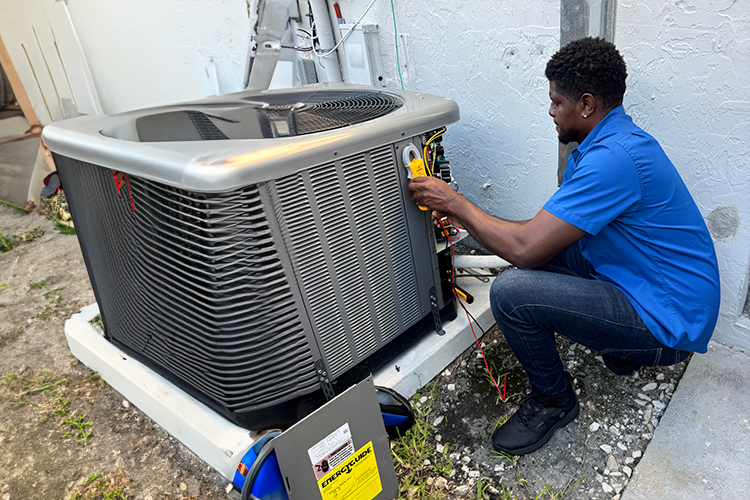
Prompt professional attention is appropriate when the system stops cooling, produces harsh mechanical noises, repeatedly trips a breaker, emits a burning smell, or shuts down shortly after starting. Turn the equipment off while waiting for help if continued operation could cause electrical or mechanical damage.
During an inspection, an air conditioning repair specialist may:
- Measure voltage, current draw, and electrical resistance
- Inspect the capacitor, contactor, wiring, and terminals
- Check refrigerant pressures and operating temperatures
- Examine coils, filters, and fans for airflow problems
- Evaluate whether the compressor is starting and running correctly
These steps help separate a compressor failure from less extensive problems. If you want to understand who will be servicing your system, visit the About Impressive Air page before scheduling an appointment.
Should You Repair or Replace the Air Conditioner?
If testing confirms compressor damage, the right solution depends on the system’s age, condition, warranty coverage, repair history, and overall efficiency. Replacing a compressor may make sense when the rest of the equipment is in good condition. For an older system with recurring problems, investing in replacement equipment may offer better long-term value.
Ask for a clear diagnosis and compare the cost of repair with the expected service life of the existing unit. A reputable specialist should also address the underlying cause of failure—such as refrigerant loss, poor airflow, or electrical trouble—rather than replacing a component without investigating why it failed.
Protect Your Cooling System With Timely Service
Changing the air filter as recommended, keeping the outdoor unit clear of debris, and scheduling periodic maintenance can reduce stress on the compressor. Just as importantly, respond early when cooling declines or the equipment begins operating differently. Small issues such as a weak electrical component or dirty coil can place unnecessary strain on the system when left unresolved.
Impressive Air provides air conditioning repair for homeowners dealing with inadequate cooling, unusual operation, and suspected compressor problems. A professional inspection can clarify what is wrong and which repair option is appropriate. If your AC is showing warning signs, contact Impressive Air to arrange an evaluation before the issue becomes more disruptive.
Frequently Asked Questions
How can I tell whether my AC compressor is going bad?
Common warnings include warm air, reduced cooling, hard starting, loud outdoor-unit noises, frequent breaker trips, and unusually long cooling cycles. These symptoms can also come from electrical, airflow, or refrigerant problems, so a technician should test the system before confirming compressor failure.
Can an air conditioner still run with a failing compressor?
It may continue running temporarily, but cooling can be weak or inconsistent. The system might also start and stop repeatedly or operate with unusual noise. Continuing to use it could worsen the damage, so shut it off and request service if it trips a breaker, makes severe noises, or smells like it is burning.
Is it better to replace an AC compressor or the entire system?
The answer depends on the equipment’s age, condition, warranty, repair history, efficiency, and the difference between repair and replacement costs. Compressor replacement may be reasonable for a sound system, while replacing older equipment with multiple problems may provide better long-term value.
What can cause an air conditioning compressor to fail?
Possible causes include electrical faults, overheating, refrigerant loss, restricted airflow, dirty coils, contaminated refrigerant, inadequate lubrication, and normal wear. A complete diagnosis should identify both the damaged component and any underlying condition that contributed to the failure.