AC Blowing Warm Air

Air Conditioning Repair: Why Is Your AC Blowing Warm Air?

Warm air from your vents can turn an ordinary afternoon into a frustrating guessing game. Is the thermostat wrong, is the filter clogged, or has something inside the system failed? Air conditioning repair starts with identifying why your AC is moving air without removing enough heat. Some causes are simple to check safely, while others involve electrical components or refrigerant and need professional attention. Here’s how to narrow down the problem without risking further damage.

Start With These Checks Before Scheduling Air Conditioning Repair

Before assuming the worst, check the controls and airflow. A running indoor fan does not necessarily mean the equipment is actively cooling your home.

Check the Thermostat Settings

Make sure the thermostat is set to COOL and the target temperature is below the current room temperature. Set the fan to AUTO rather than ON. In the ON position, the fan can circulate room-temperature air between cooling cycles, which may feel warm at the vents. If you recently changed a schedule, replaced batteries, or experienced a power interruption, review the settings again. Allow a few minutes for any built-in compressor delay before judging the result.

Look for Restricted Airflow

A dirty filter can reduce the amount of air passing over the indoor evaporator coil. That limits cooling and, in some cases, contributes to ice formation. Check the filter and replace it if it is dirty, using the size and type specified for your equipment. Keep return grilles clear of furniture and avoid closing numerous supply vents to redirect cooling. Your system needs adequate airflow to work properly.
  • At the thermostat: Confirm cooling mode, a lower temperature setting, and the AUTO fan setting.
  • At the filter and vents: Check for a clogged filter, blocked returns, or closed supply registers.
  • Outside: From a safe distance, look for debris around the condenser and note whether the unit appears to run during a cooling call.
If these checks do not restore cooling, arrange air conditioning repair with Impressive Air rather than repeatedly lowering the thermostat. A colder setting will not fix a mechanical problem.

Common Reasons Your AC Blows Warm Air

The Outdoor Unit Is Not Removing Heat

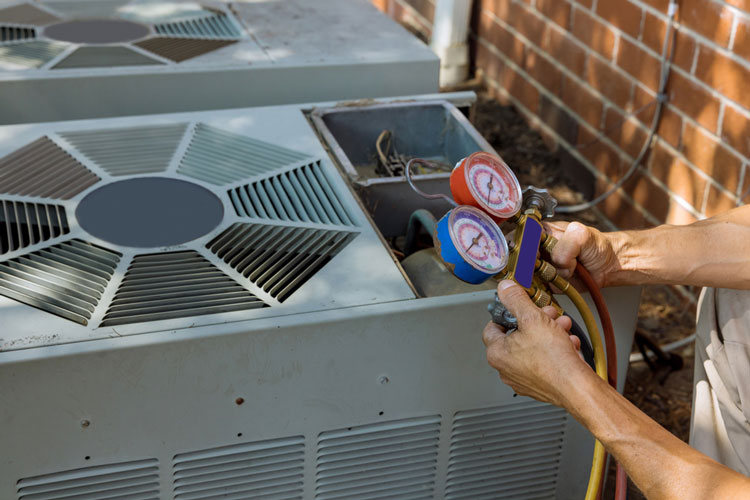
In a typical central air conditioner, the indoor coil absorbs heat and the outdoor unit releases it. If the outdoor equipment stops working while the indoor blower continues running, air can still come through the vents without being cooled. Possible causes include a power interruption, a failed capacitor, a damaged contactor, or a compressor problem. You cannot reliably distinguish these faults by sound alone. Do not open electrical panels, touch wiring, or attempt capacitor testing; components can retain a dangerous charge even when power is disconnected.

The Evaporator Coil Has Frozen

Ice on refrigerant tubing or around the indoor coil is a warning sign, not evidence of extra cooling. Restricted airflow or certain refrigerant problems can allow the coil temperature to fall too low. As ice builds, airflow and cooling performance can deteriorate further. Turn cooling off if you see ice. Do not chip it away or use a heat gun. If there is no electrical concern and the blower operates normally, the fan-only setting may help it thaw. Have the underlying cause checked before resuming normal operation.

Refrigerant Is Low or the Condenser Is Dirty

Refrigerant carries heat through a sealed circuit. It is not a fuel that normally gets used up. An incorrect charge may result from a leak or an earlier installation or service issue. Weak cooling, ice, and unusually long cycles can occur with refrigerant problems, but these symptoms overlap with other faults. A technician needs measurements and testing to confirm the cause. Simply adding refrigerant without investigating a suspected leak can leave the problem unresolved.


A dirty outdoor coil can also make it harder to release heat. Leaves, grass clippings, and nearby vegetation may restrict airflow around the condenser. Keep the surrounding area clear according to the equipment manufacturer’s guidance, but leave coil disassembly and deep cleaning to a professional. When discussing cooling-system care with Impressive Air, ask which maintenance tasks are appropriate for your particular system.

Duct Problems Can Affect Delivered Air

If some rooms cool normally while others stay warm, the problem may involve duct leakage, disconnected ductwork, or airflow distribution rather than a complete equipment failure. Ducts running through a hot attic can lose cooling effectiveness when insulation or seals are damaged. Note which rooms are affected and whether airflow feels weaker there. Those details help a technician separate a whole-system cooling problem from a localized delivery issue.

Know When to Stop Troubleshooting and Call

Shut the system down and seek professional help if you notice a burning smell, repeated breaker trips, unusual electrical buzzing, or significant ice buildup. Do not repeatedly reset a tripping breaker or keep restarting equipment that struggles to run. If water is leaking near electrical components, avoid the area.


For other persistent warm-air problems, record when the issue began, whether the outdoor unit runs, and what you have already checked. Reliable air conditioning repair should address the cause, not just temporarily improve the vent temperature. Ask for an explanation of the diagnosis, the proposed work, and the cost before authorizing repairs.


Impressive Air provides air conditioning repair for homeowners dealing with cooling problems. When you contact Impressive Air about warm air from your AC, share your observations and ask about the next step in diagnosis. Choosing dependable service means looking for clear communication and a repair recommendation supported by testing—not guesswork.

Frequently Asked Questions

What should I check first when my AC blows warm air?

Check that the thermostat is set to COOL, the target temperature is below room temperature, and the fan is on AUTO. Then inspect the air filter and make sure supply vents and return grilles are unobstructed. If cooling does not improve, schedule a professional diagnosis.

Can a clogged air filter stop an air conditioner from cooling?

Yes. A clogged filter can restrict airflow across the evaporator coil, reducing cooling and potentially contributing to ice buildup. Replace a dirty filter with the correct type. If you see ice, turn cooling off and have the cause checked before restarting.

Should I leave my AC running if the air feels warm?

First check the thermostat settings. If the system continues blowing warm air during a cooling call, turn cooling off and arrange service. Shut it down promptly if you notice ice, a burning smell, repeated breaker trips, or unusual electrical sounds.

Does warm air from the vents mean the AC needs more refrigerant?

Not necessarily. Thermostat settings, airflow restrictions, electrical faults, dirty coils, and duct problems can also affect cooling. Refrigerant normally stays inside a sealed circuit. A technician should test the system and investigate any suspected leak rather than simply add refrigerant.

Tags: AC blowing warm air, AC not cooling, air conditioning repair, dirty air filter, frozen evaporator coil, thermostat settings

Related Posts

keyboard_arrow_up
Call Now Button